Some conversations only get harder, the longer you leave them
Watch on YouTubeListen on SpotifySubscribe on LinkedIn
Yes, it's The Friday Takeaway on a Monday this time! I recorded it on Friday morning, a little croaky from a late night, and it took so long to upload, I decided to leave it until today to post.
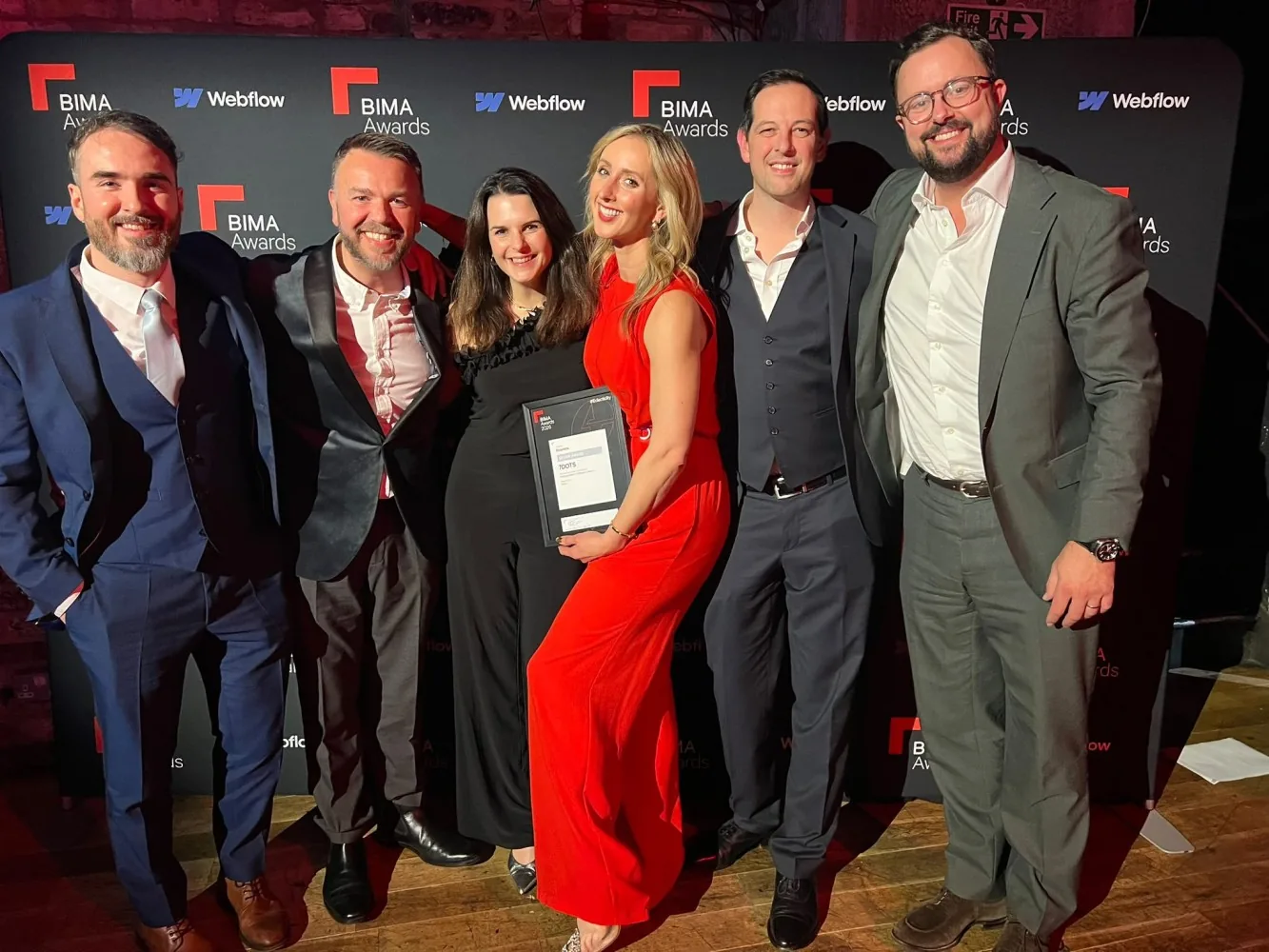
The croaky voice? We were at the BIMA Awards on Thursday, where we won silver for our work with Miller Insurance. An incredible evening with the teams from Miller and 7DOTS, and a massive thank you to everyone involved in that project.
This week I'm going to cover:
- How you get a team behind something
- The thinking class
- The importance of meeting old faces
This week
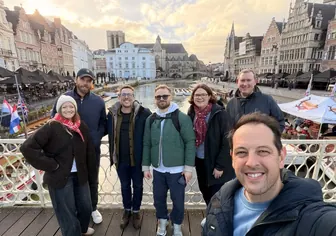
- Catching up. We were away on our company trip the week before, which meant an incredible time having the conversations that really matter. The flip side is Monday and Tuesday were a lot of catching up.
- A client coming back. They went to somebody else a couple of years ago, a very nice parting, for a very good reason. It's always nice when someone comes back, as you know you built something good that lasted beyond the relationship.
- New opportunities. Lots of conversations about platforms and marketplaces, some start-ups, some well established. Those first conversations are always fun.
- The rose business. Vicki Young from Nalla is helping me with the brand and visual identity, and filling in her questionnaire was so good for clarifying what the business is all about. There's more in my Sunday post yesterday about this: Launching a rose business: the two-week update.
How do you get a team behind something?
People are really resistant to change, even when it's probably a good thing for them. I feel it as well.
Last week I helped Fram Farmers Ltd, one of our clients, interview people for a digital transformation role. It was absolutely lovely to be involved, and one question came up multiple times: how do you get a team behind a big transformation, when we know people don't like change?
Andrew Knowles, the CEO of Fram, made such a brilliant point. Start with the why. If people understand why you're doing something, they're much more likely to get behind it.
For me, there are three things:
- Explain the why. A great reminder from Andrew, and I'm a fan of Simon Sinek's talks about this.
- Reduce the fear. What will people be fearful of in this project?
- Create a clear, structured roadmap. It needs to adapt, but there has to be a clear path from where you are now to where you need to be.
This thread led on to our own systems and processes at 7DOTS. We evolve constantly as a business, and with evolution comes change and messiness. In conversations with our leadership team, in particular Bella Kernan, a great point came up: you need to spot every problem, but you also need to help by starting to solve one of them. We're getting very clear on our processes first, so we can ensure the tools support them as needed.
Most companies know the direction they need to go. What they're struggling with is aligning their teams behind it, in particular the work 7DOTS does, marketing, sales, customer experience and product.
The thinking class
This came up on a podcast I was listening to. The theory is that in an AI-driven world, the human race will split into a thinking class and a doing class.
I'm not so sure. I think there's a lot of hype in that, and everybody needs to think to a degree with technology.
It came up this week with Lockwood, the bank Anne Boden is launching, where AI agents manage and defend your money. An agent cancelling a subscription? Sure. An agent moving my savings around and managing my pension? We're a way off that, because the technology and the trust aren't there yet. By 2028, when it launches, I think we'll be part of the way there.
I love that Anne's done this. It's a bold move. You should have a dream, make it bigger, and just go for it.
Lots of people commented on my post: Anne Boden is building a new bank for customers who let AI agents manage their money. Danielle Heron said she wouldn't trust AI with her money when she can't trust it to tell her how many Rs are in strawberry, which I quite enjoyed!
The key thing for human beings is that we keep thinking. AI is trained on a vast set of data. We bring the unique thinking and creativity to create something new, with empathy and meaning for people.
How I've used Claude this week
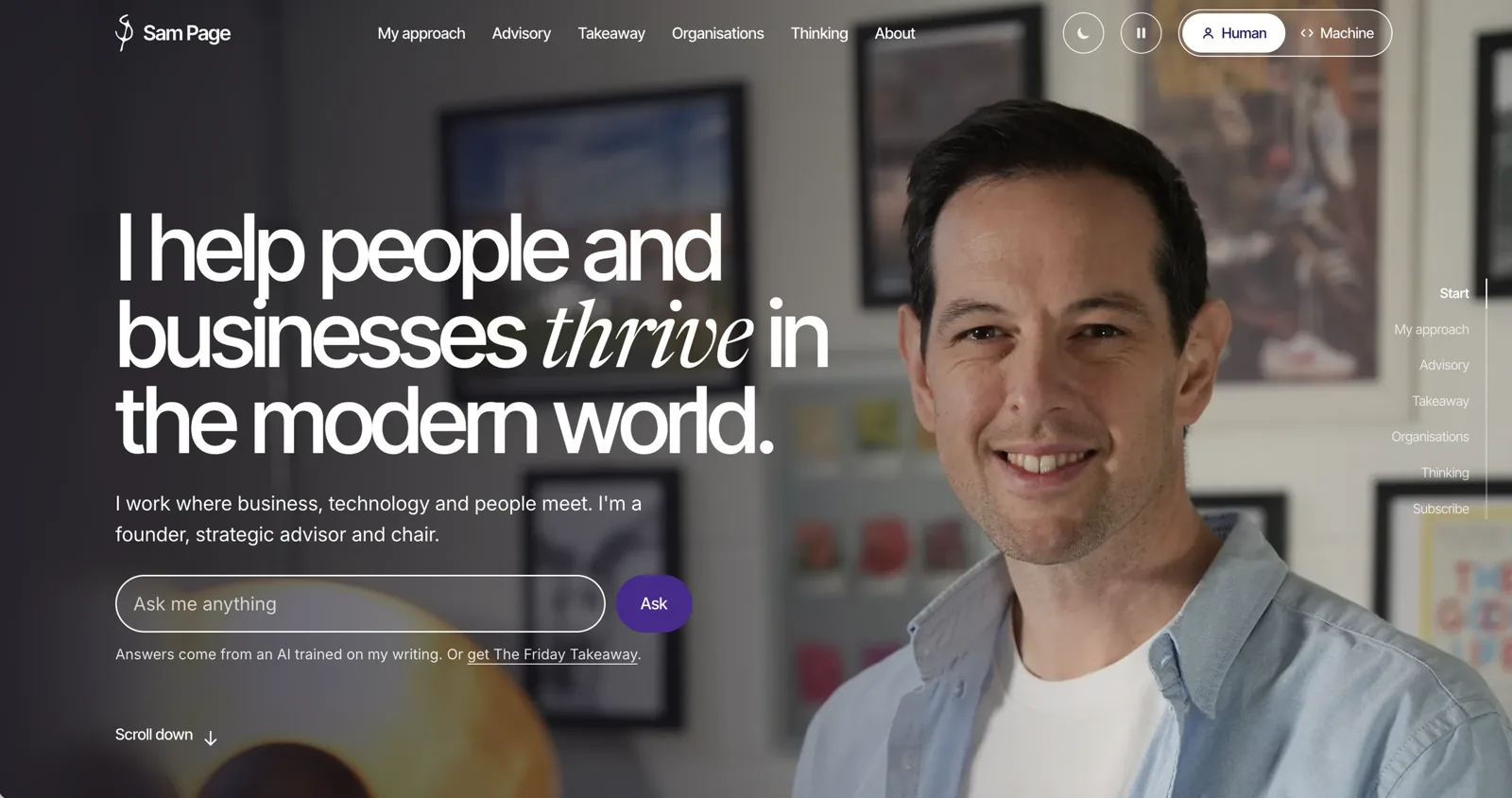
- My personal website. I rebuilt it entirely using AI, and spent a lot of time making sure it doesn't look built by AI, ironically. I also still use a headless CMS called Sanity to ensure I can edit without AI.
- Handwritten notes. I still take notes by hand, it's how I remember things. Now I photograph them and AI writes them up into a knowledge base.
- LinkedIn. I built a skill that finds posts relevant to me. I don't use it to write or add comments. I do that myself.
What I don't let it do is think original ideas on my behalf. I feed in my perspective, get it to critique and build on it, then I craft the output. We can all tell when an email's been written by AI. It feels so soulless.
Meeting with Richard
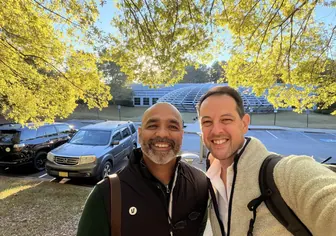
On Thursday I sat down with Richard Bush. I absolutely love our meetings. When I first moved to London, I went to work for Richard at Base One, and from the very first moment I met him, I had huge respect for him. Twenty years later, we regularly meet for coffee, and we've had a business together too. Not only did our relationship survive me leaving Base One to set up 7DOTS, but it became stronger for it over time.
He's a brilliant questioner. And we laughed so much. You need to bring that bit of humility into life from time to time to make everything work a bit better. But we also really got stuck into talking about what's going on in the world, what challenges people face, and my new rose business.
Thank you Richard. And you said you'll come on The Friday Takeaway, so you have to now!
Sometimes you need to share what's happening with someone who already has some of the context, and get their perspective. Family, friends, anyone at work. Make more time for it.
The Friday Takeaway
Don't put off difficult conversations. I know we hear this time and time again, but it's so true. When I've put one off, it's just got harder every moment.
Ed Gossage and I had lots of conversations this week, some of them difficult. Things that needed to be said. We went into them with huge understanding, and vulnerability, and they were so productive. We both left feeling so much better for it.
Go into conversations like this constructively, with empathy, and try to see the other person's point of view first. Amazing outcomes happen.
Before you go
Mark Kennedy is still looking for a job. He was on BBC radio a couple of weeks ago, talking about the amazing stuff he does with film. If you're looking for a product or project manager, please think about talking to Mark. Even if he's not right for the role, he'd really appreciate the conversation, so he can learn and move forward.
One question for you, which ironically I know, no one can answer on here: What conversation have you been putting off? Now go have that chat.
Until next week...
Don't put off difficult conversations. Go into them constructively, with empathy, and try to see the other person's point of view first.
Also on LinkedIn.